
What Causes Sudden Ant Infestations?
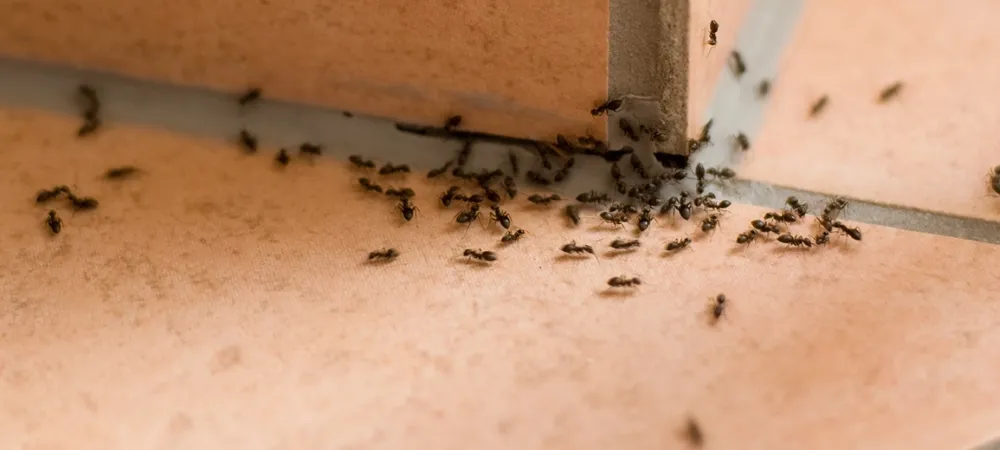
Sudden ant infestations are almost always triggered by a weather shift, a new food source, or a disturbed nest, not by anything a homeowner did wrong. Heavy rain floods outdoor colonies and drives them toward higher, drier ground, which is often the inside of a house. Once a scout ant finds food or water indoors, it lays a pheromone trail that recruits dozens more workers within hours, which is why a problem that looked like nothing on Monday can look like a moving carpet by Wednesday.
Why Ants Show Up Overnight
Ant colonies operate on scouting, not chance. A single forager locates a food or water source, returns to the nest, and lays down a chemical trail for the rest of the colony to follow. That trail is why ants seem to appear in a straight line rather than scattered randomly, and why the population indoors can jump from a handful to hundreds in a single day once the trail is established.
Myth: Ants Mean the House Is Dirty
Ant activity is a response to specific triggers, not a reflection of housekeeping. A well-kept home can see a sudden indoor ant problem after a hard rain floods an outdoor colony near the foundation, after a landscaping project disturbs an underground nest, or simply because a colony's usual food source outside dried up. Cleanliness affects how quickly ants find something worth recruiting for once they're inside, but it isn't what brings them there in the first place.
What actually drives a sudden invasion: heavy rain or drought, a nearby construction or landscaping project, temperature swings in spring and fall, and small gaps around foundations, utility lines, or window frames that give ants an easy way in.
Common Questions About Sudden Ant Problems
Does rain cause ant infestations?
Yes. Heavy or prolonged rain floods underground ant colonies, and the workers relocate to higher, drier ground to protect the queen and the brood. A house sitting right next to that flooded nest site is often the nearest dry option.
Will ants go away on their own?
Rarely, once a colony has established an indoor food source. The pheromone trail that brought the first wave of workers stays active until the food source is removed or the colony is treated at the source, so activity typically continues or grows rather than fading out.
How long does an ant infestation last without treatment?
An untreated infestation can persist for weeks or months, since the visible ants are only a fraction of the colony. Removing food access slows activity but doesn't eliminate a nest that's already established nearby.
Are sudden ant infestations a sign of a bigger problem?
Not usually a structural one, but the species matters. Most household ants are a nuisance rather than a health or safety risk, with one notable exception: carpenter ants, which excavate nesting galleries in moist or damaged wood and are worth a professional inspection if you're seeing them indoors.
Dealing with a sudden ant problem, or just want to know what species you're looking at? Call Frontline Pest Control at 877-378-7280 and we'll help you figure out the right next step.
Stop Guessing Where They're Coming From
Frontline finds the actual colony and entry points driving the activity, not just the trail on your counter.
Get Ant Control Help